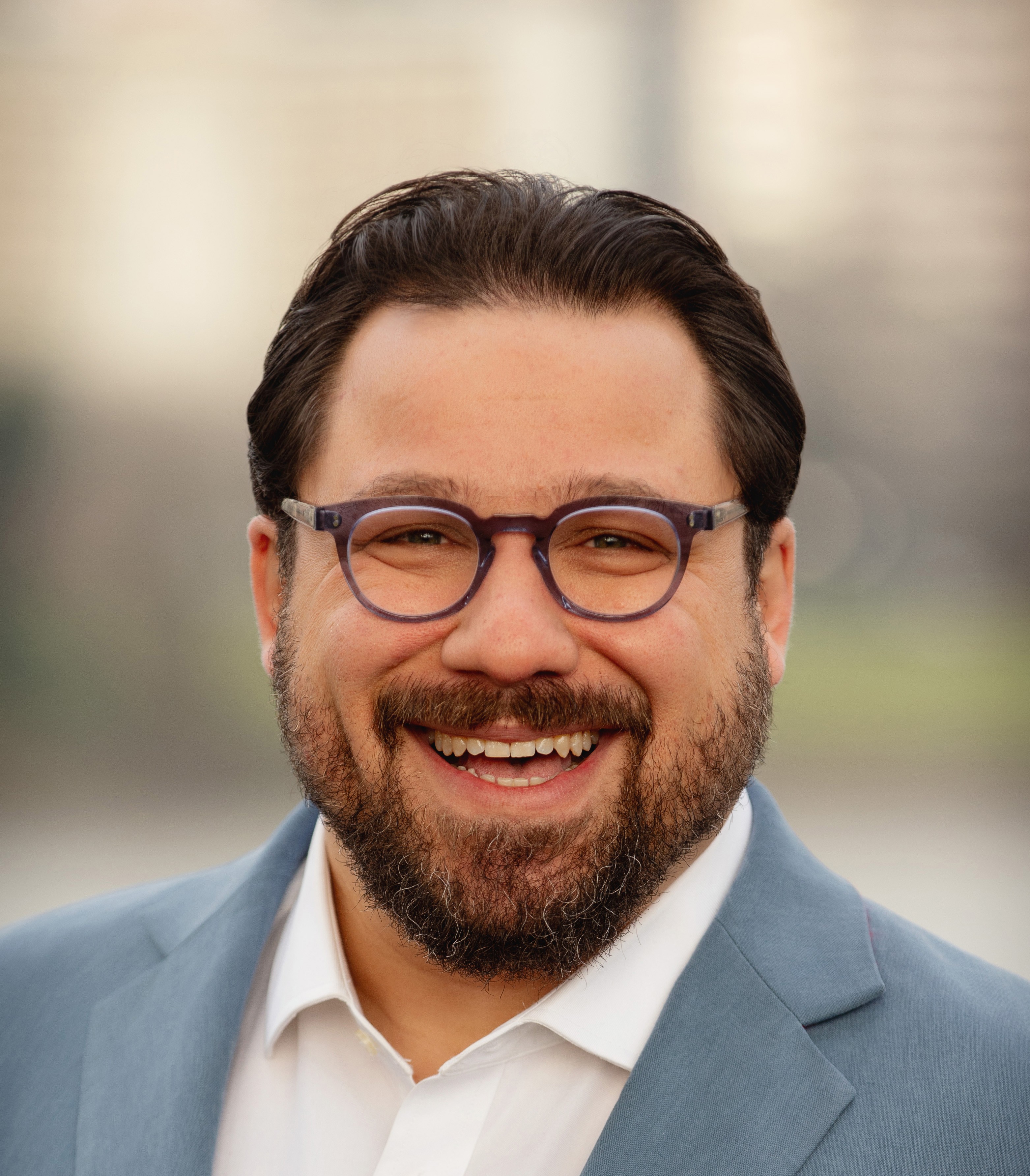
Showing Up: A Conversation with Craig Gerard, Chief Development Officer at BB360 and co-founder of Stone Soup PDX
Craig Gerard has spent his career turning Jewish values into action, including through the nonprofit Stone Soup PDX he co-founded in 2019 with his wife, Ronit, which offers culinary training to people experiencing barriers to employment. Now the Chief Development Officer of the camp-focused Jewish community organization BB360, Craig is dedicated to the belief that doing good should also be joyful. In this interview, he reflects on living abroad, why listening must come before acting, and what Stone Soup’s participants taught him about service.
What did Jewish life and values look like in your home growing up? When did they start to shape how you thought about service?
The teaching of Jewish values was always there when I was growing up. We went to synagogue, volunteered in the community, and helping others was just part of what we did. At the time, I don't think I consciously connected those things to Jewish values. It wasn't until I got to college and stepped away from home that I realized not everyone had grown up that way.
A pivotal moment came before my junior year abroad at Hebrew University in Jerusalem. I took a business class where one of our texts was Viktor Frankl's autobiography. The course focused on self-reflection, becoming a better listener, and thinking deeply about what kind of person you wanted to be. Combined with preparing to spend a year in Israel, it pushed me to reflect more deeply on Judaism, service, and how intertwined they had always been in my life. Before leaving for Israel, I found myself asking, "What is my mission?" That process really amplified my desire to serve others and giveback, while helping me recognize how much those values were rooted in my upbringing.
BB360 spans overnight camp, day camp, BBYO, adult camps, and service programs like the Lincoln County Food Program. Where do you see the overlap between Jewish community-building and service?
They really intertwine throughout everything we do.
It's not just the days of service that BB360 runs, or the Lincoln County Food Program, or the camp scholarships we provide. One example is the support we give to Lincoln City Day Camp, where most of the participants aren't Jewish. Yes, there is tremendous need in that community, but it's also about the experience those kids and families have. Kids get the chance to play, make friends, and have a summer camp experience without their parents having to worry about what they're going to do all day. Their parents can go to work knowing their children are safe and engaged.
Those experiences matter. They shape how people view the Jewish community and the values we represent. They build relationships and understanding in ways that can last a lifetime.
More broadly, one of BB360's goals is to provide opportunities for Jewish engagement at every stage of life. We have programs for grandparents and grandchildren, day camp, overnight camp, BBYO, emerging professionals, adult camps, and new programs like Camp L'Chaim for older adults.
Portland is full of Jews who don't necessarily want to spend their entire lives connected to a single organization. People want to engage in different ways at different times in their lives. We want to create opportunities for people to build community, participate, and connect, regardless of their age or stage of life. People should be able to show up exactly as they are, with no expectations attached.
Camp shapes identity for many kids. How do you think about helping young people connect to Jewish life and a sense of responsibility to the wider world?
Jewish summer camp absolutely shaped how I became a Jew inthe world.
Research consistently shows that attending Jewish summer camp is one of the strongest indicators that a Jewish child will become an engaged Jewish adult. Camp gives kids the opportunity to be their full selves, meet other Jewish kids, and experience the joy of being Jewish.
For much of the year, Judaism can sometimes feel like something kids have to explain, defend, or even hide. Camp flips that experience. It gives them confidence, pride, and a sense of belonging. They learn how to talk about Judaism, how to respond to antisemitism when they encounter it, and how to take pride in who they are.
Most importantly, camp helps them associate Jewish identity with joy, friendship, and community, and that's something they carry with them long after the summer ends.
As Community Service Director at the Jewish Community Center in DC, you ran Behrend Builders, rebuilding homes, schools, and community centers. What stayed with you from that work?
Behrend Builders was just one part of a larger community service department. We ran feeding programs, organized service days, and led a variety of volunteer initiatives. But Behrend stood out because of the direct impact it had on people's lives.
We would identify homeowners who couldn't afford critical repairs, bring in volunteers, cover the cost of materials, and help restore their homes. I remember one woman who’s home was in southeast Washington, D.C., whose basement had burned and become completely unusable. Our volunteers replaced drywall and insulation and restored the space for her.
What has stayed with me most is the importance of proximity. When you spend time with people who aren't normally in your social bubble, you become aware of differences, but you also realize how much we all have in common. Through Behrend and the many other programs we ran, I met incredible people I never otherwise would have crossed paths with. Those relationships and perspectives have stayed with me ever since.
You supported Ronit's Foreign Service career in Cairo, Phnom Penh, Dakar, and Rome in roles that were often defined by someone else's career. What did you learn about showing up for a community that wasn't yours?
The truth is, all of those communities became mine.
When you move to an embassy posting or a foreign city, the expat community becomes your community. Those are your friends, where your kids go to school, where you play sports, and where you build a life together.
For me, the question was always: How can we leave this community better than we found it? Sometimes that meant starting something social. I helped launch ultimate frisbee leagues in both Dakar and Phnom Penh. That wasn't necessarily charitable work. Honestly, I just wanted people to play frisbee with. But building those connections strengthened the community.
Other times it meant volunteering with an employee association, planting trees, or supporting local initiatives. While living in Phnom Penh, I wrote for an expat magazine, and Ronit participated in community theater. We always looked for ways to show up and contribute.
When you move overseas, it can be incredibly isolating if you don't build community. For us, we didn’t see it as optional. We wanted friendships, opportunities for our children, and a sense of belonging. The difference between moving abroad and moving somewhere in the United States is that overseas, many are looking for those same connections. People are eager to meet new friends and build community together.
In Fougoulou, your family built toilets, handwashing stations, a garden, and a school fence. How did you decide what to do, and what did you learn about listening before acting?
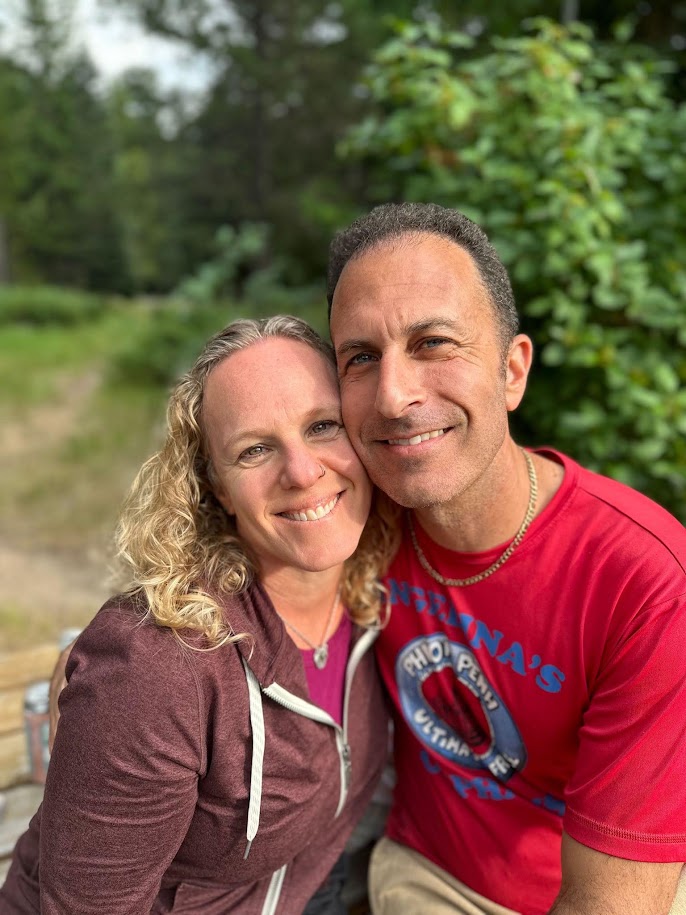
Fougoulou was where Ronit's served as a Peace Corps volunteer before we met. Moving to Senegal was, in many ways, a homecoming for her. She was able to bring our family and our children back to meet the people she considered family from her time there.
Our kids would jump out of the car and immediately run off to play with the children, speaking French together. In many ways they were family, even though their lives could not have looked more different. This was a village without running water or electricity, but Ronit's connection to the community was incredibly strong.
Back in 2004, after one of our visits to Senegal, we held a fundraiser to support the village. We originally hoped to pass the funds along to a Peace Corps volunteer working there, but there wasn't one at the time. Years later, when we were assigned to Senegal, we still had those funds and finally had the opportunity to put them to use.
The first thing we did was meet with village residents and ask what they wanted. They talked about gardens, school repairs, wells, and other community needs. We listened first, then worked together to determine how best to help. We visited several times each year, and every visit began with the same question: What's the next step?
One experience that left a lasting impression on me involved Tostan, an organization that does community health and education work. One of the issues they address is female circumcision. Ronit and I felt strongly about supporting that effort. What impressed me about Tostan's approach was that it wasn't about outsiders coming in and lecturing people. Instead, local educators facilitated conversations and helped communities arrive at conclusions themselves.
Unfortunately, the particular project we funded didn't succeed. The educator we hired mismanaged the project, and it never reached completion. It was a difficult lesson. Working with Tostan reinforced for me that it does not work to impose your own values on a community that isn't ready for change. And though the blame for the failure falls squarely on the teacher we hired, to this day, it remains one of my greatest regrets from our work in Fougoulou. Years later, despite everything we know about the harms involved, the practice still continues there. That experience taught me a tremendous amount about humility, patience, and the limits of outside influence.
Did being Jewish in those places, Egypt and Senegal in particular, change how you understood your own identity or values?
Not necessarily, but it did make us much more intentional about practicing Judaism.
Both Egypt and Senegal are majority Muslim countries, so if we wanted Judaism to be part of our family life, we had to create those experiences ourselves. We lit Shabbat candles, taught our boys, celebrated holidays, and made a conscious effort to maintain Jewish traditions because we weren't getting those experiences from the surrounding environment.
The experience was very different in each country. In Egypt, we tended to be more private about being Jewish. Many Egyptians associate Jews with Israelis, and Israelis with wars their parents or grandparents experienced. There often wasn't much room for nuance in those conversations.
Senegal was very different. People were generally open, curious, and welcoming. There wasn't much Jewish infrastructure there either, but people were interested and respectful. Ultimately, in both places, it was up to us to make sure our children learned those traditions and values.
You've said the idea for Stone Soup took shape on a car ride in Cambodia. What did you see that made you want to build a social enterprise instead of handing out meals?
The original concept actually was about handing out meals. Early on, we imagined something like a soup kitchen by day and a catering hall by night.
We were inspired by Friends International, which operated a café in Phnom Penh that trained street-involved youth for food service careers. When we eventually came back to Portland, we spent a lot of time researching local needs and speaking with community leaders. One conversation with someone at Union Gospel Mission was especially influential. They explained that Portland already had many places where people could get food. Another feeding program wasn't necessarily what the city needed most.
That pushed us back to the drawing board. We started asking what gap really existed, and the answer we kept hearing was job training.
We learned about FareStart in Seattle, met with their team,and drew heavily from their experience. Organizations like FareStart and Catalyst Kitchens helped us get Stone Soup off the ground and shortened our learning curve tremendously.
At the end of the day, it was really about listening to what the community needed.
The Stone Soup story is about everyone contributing a little. How does that idea connect, for you, to Jewish concepts like tzedakah or tikkun olam?
To me, they go hand in hand. The Stone Soup story we used to read to our boys is really about the idea that if each of us contributes a little, together we can solve much bigger problems. When people cooperate and combine their resources, extraordinary things can happen.
Take food insecurity. The challenge isn't necessarily producing more food. We already grow enough food to feed everyone. The bigger issues are distribution and waste. If we solved those problems, we could feed far more people with the resources we already have.
When Ronit and I started Stone Soup, the value of tikkun olam, repairing the world, was one of our biggest motivations. We wanted to leave the world better than we found it and create something that would make a difference for future generations, including our own children.
Starting a nonprofit restaurant with job training is hard. What did you learn from the people who went through the program?
A lot of it goes back to proximity. Whenever you're in community with people who are outside your normal circle, there is always something to learn.
When I first entered this work, I probably carried a bit of a savior mentality. I thought, "We're going to come in, fix problems, and provide resources." It didn't take long for our participants to show me how wrong that perspective was.
What I came to understand is that people are incredibly capable and deserving of success. Often, one or two difficult circumstances, things that could happen to any of us, put them in situations where they neededa helping hand.
One example was our decision to rename what had originally been called "life skills" classes. That term implied participants somehow lacked life skills, which wasn't true at all. They brought tremendous experience, resilience, and knowledge with them. Maybe they needed to learn a few new skills or strengthen others, but everyone had something valuable to contribute.
One of the most eye-opening parts of the experience was learning from participants themselves. Sometimes they taught me techniques in the kitchen that I didn't know. Other times they shared perspectives I had never considered. If you stay curious and open to learning, it serves you well no matter where you come from or where you are in life.
I also remember one participant who eventually joined our staff after completing the program. She provided incredibly candid feedback and constantly advocated for future participants. She pointed out small things that didn't feel right and suggested ways we could improve the experience. Those conversations were invaluable because they came from someone who had lived the program firsthand. Her insights helped us strengthen the program for everyone who followed.
Can you share a moment when your Jewish values and your work in the broader community clearly reinforced each other?
The first example that comes to mind is starting Stone Soup. The idea was deeply rooted in tikkun olam and in asking how we could identify a problem in Portland and turn it into an opportunity to help people.
At the same time, I see those values reflected in much ofthe work BB360 does today. Whether it's raising money for camp scholarships, supporting kids in Lincoln City, operating programs that address food insecurity, or providing emergency assistance in Lincoln County, those efforts are all grounded in Jewish values.
We don't do those things because they look good. We do them because they're the right thing to do.
At BB Camp, we firmly believe that a Jewish summer camp experience can have a transformative impact on a young person's life. One of our core commitments is keeping camp affordable and accessible. Camp can become expensive very quickly, and that's why campership fundraising is so important. We want every child to have the opportunity to participate, regardless of financial circumstances.
What are you most hopeful about right now, for BB360, for Portland, or for the Jewish community?
One thing that gives me a lot of hope is the large number ofunaffiliated Jews in Portland.
Reaching those individuals can be challenging, but it's also a tremendous opportunity. If we can connect even a small percentage of them to Jewish life, whether through BB360 or through the broader Jewish community, the possibilities are enormous.
I think people are hungry for community right now. So much of modern life happens through screens, and that can make genuine connection harder to find. One thing BB360 offers, whether through BB Camp or our year-round programs, is the opportunity for people to connect face-to-face and build meaningful relationships. At camp, kids don't have phones, and they're able to experience community in a very real way. I think people are craving that, and I hope we can continue bringing more people into those experiences.
I'm also encouraged by the potential growth of Jewish camping in the Pacific Northwest. The percentage of Jewish families who send their children to Jewish summer camp in Portland and Seattle is significantly below the national average. If we simply reached the national average, many of the camps in our region would immediately have waitlists.
That goal doesn't feel unattainable. At the same time, we're seeing declining youth populations overall, which affects camps everywhere. But if we can reach people who are looking for community and connection, I believe our organizations will thrive.
If you could leave readers with one takeaway about how to show up for both your community and the larger world, what would it be?
It starts with showing up.
It's about being present and investing your time and energy in the things that matter most to you. If your values align with a nonprofit or community organization, find ways to get involved. Volunteer. Participate. Build relationships.
There's no substitute for person-to-person connection and community-building.
Too often, people think of volunteerism or charitable work as something they're obligated to do. I think it should also be joyful. It should be a place where friends gather, where relationships are built, and where people find meaning together.
That's a lot of what we try to create through BB360's camps, retreats, service opportunities, and community events. We want people to do good work, live their values, and strengthen their communities, but also to experience joy while doing it.