Nili Yosha, founder of Outside the Frame, on Filmmaking as a Lifeline for Portland's Youth
Nili Yosha is the Artistic & Executive Director of Outside the Frame (OTF), a Portland-based filmmaking program for unhoused and street-connected youth. OJCF is a proud supporter of OTF.
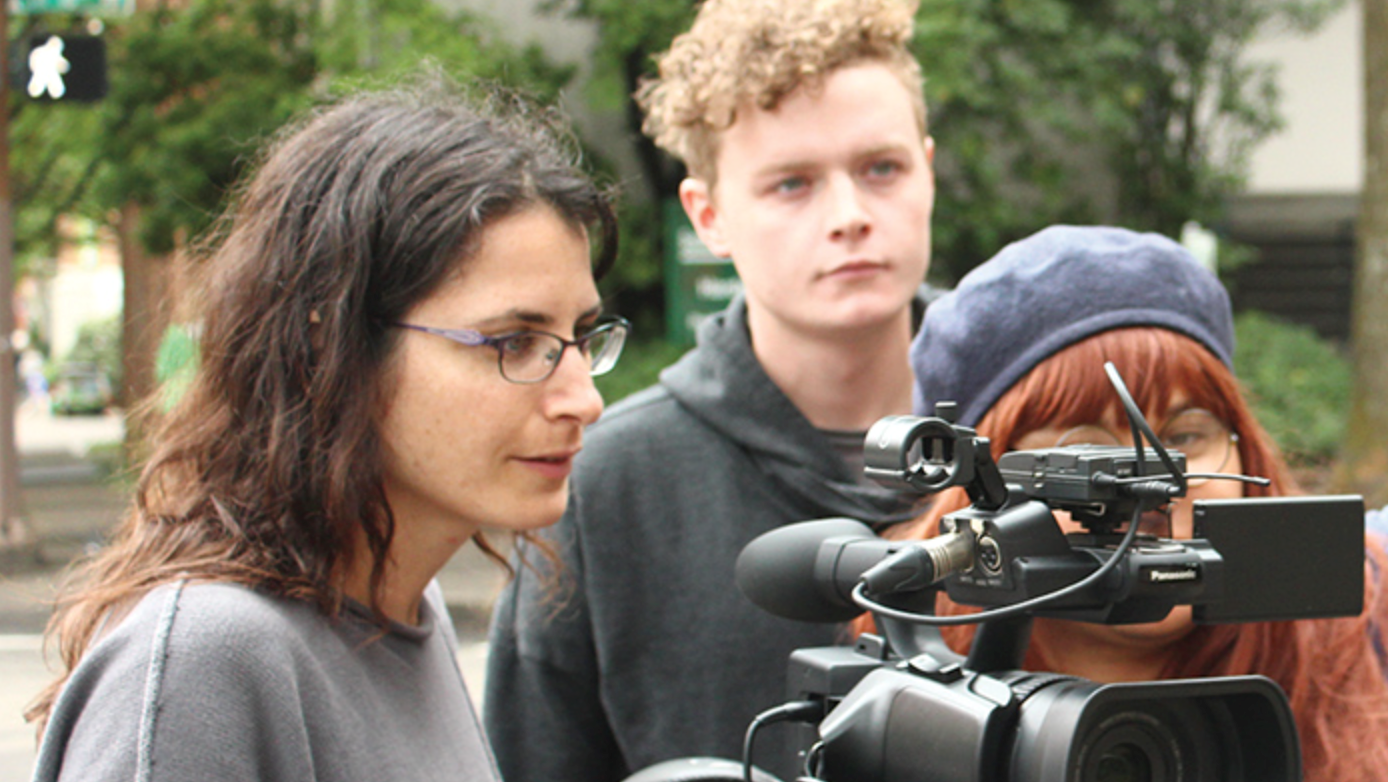
Nili Yosha is the Artistic & Executive Director of Outside the Frame (OTF), a Portland-based filmmaking program for unhoused and street-connected youth. OJCF is a proud supporter of OTF.
It was over a decade ago that Yosha set out to make sure a group of kids everyone else had written off got to tell their own stories. Raised in Tel Aviv by parents who made Israel’s first anti-war film, she grew up watching art used as a tool for change, which was a lesson she carried into her own work, first at the nonprofit Outside In, then in founding Outside the Frame in 2015. What began as a scrappy effort to support kids she found “brilliant and hilarious” has grown into a program with over 175 films, 800-plus student participants, and partners ranging from the Oregon Symphony to the Venice Biennale.
We talked with Yosha about her path into filmmaking, why the medium itself matters so much for youth telling their own stories, and what’s next for Outside the Frame.
Q: You grew up in Tel Aviv, the daughter of indie filmmakers who made Israel’’s first anti-war film. How did that upbringing shape your relationship to filmmaking and storytelling?
A: My parents’ movie making was all-consuming. They made their first film, Peace, when they were 19 and 21. The film was clearly a cry for the world to be a better place, not entertainment; I reluctantly assisted in their filmmaking, and forged my own path by being active in a political youth group in high school.
Outside the Frame is modeled on youth movements, and the studio is a place for unhoused kids to feel at home and feel empowered to decide what they make the movies about.
Q: You started what would become Outside the Frame back in 2009, years before it became its own organization in 2015. What was happening in that moment that made you realize homeless youth needed a filmmaking program, and needed to be the ones telling their own stories?
A: I was running a recreation program in the basement of Outside In, and the kids were brilliant and hilarious. Their reputation was that they were troublemakers who wanted to be homeless (blaming the victim), but they were my favorite people in town. I could talk straight to them.
My job at Outside In was funded by a three-year grant, and I sought out ways to engage the kids that would matter to them, and that would also show the world how brilliant they are. By making and sharing movies, of course!!
When my position at Outside In ended, I made The Lost Boys of Portlandia, a film about youth on the streets, and I worked for Planned Parenthood for a time. Once I got pregnant I realized I wanted my kids to see their mother doing what she was meant to do. My parents had their own two-person production company, so how hard could it be? I established Outside the Frame and have never looked back.
Q: You’ve done an exemplary job of building partnerships in Portland’s creative economy to benefit homeless youth. You’ve done this with Outside In, of course, but also Portland Art Museum, the Hollywood Theatre, and others. What do you think is the key to that success?
A: The American Dream ethos of being self-made is untrue. We need each other. The key to successful partnerships is not just finding like-minded people to work with, but taking the time to develop relationships, meeting in person, not being transactional, waiting for the right opportunities, playing to each other’s strengths, and being willing to share credit.
I could not do any of this without recruiting participants from the agencies that provide life-saving services to transitional youth. Because you can’t do the fun, creative stuff without the basic needs being tended to. The indie filmmakers who come and work with OTF and give generously of their time and talents are also hugely important. It takes a special person to be good with craft and with people.
At its core, OTF is youth making the films they want to make. They get to tell their story and present it back to the people helping them do it. So the partners also get a lot out of it, too.
Q: What is it about combining filmmaking specifically, as opposed to another art form or intervention, that you see as the right tool for change in these young people’s lives?
A: It is public facing, it is accessible, it is the medium of our generation and century. Poetry stays in the drawer, visual art is confined to the wall. Filmmaking comes to the people.
Our success is due in part because film is a public medium, an emotional medium, and it moves you. It also requires a lot of different collaborations, which makes it a microcosm where people can be their best selves when they’re working on a project. It’s a good way to pass the time while doing something productive, worthwhile, and fun. It changes everyone that is a part of it. Films are not lines on a resume, they are biography. And because they are shown to an audience, maybe they change the viewers, too.
Q: Over the past decade, OTF has produced more than 175 short films and music videos for 800-plus students, with collaborations ranging from the Oregon Symphony to Tech N9ne to the Venice Biennale. Has this level of growth surprised you?
A: It helps to believe that what you are doing is super important, because it allows others to believe it, too. And then it can happen. It does not surprise me that we’ve grown as much as we have. The kids are worthy of it.
Q: What's your hope for the next chapter of Outside the Frame?
A: We want financial stability so we can keep doing this work, because we are not free until everyone is. Our model is an intervention that could work on a much larger level. It would be cool to see it spread to other cities, if it were to get the support needed to do so. But we are content with having the Portland chapter taken care of. Whether that means owning a building, or getting a building endowment, either of those scenarios would help significantly. It takes about $1 million per year to run the nonprofit, and we would like to do more to support all the kids learning and working, so they can stand on their own feet.
Photo C: