
18 Years of Building Home: A Conversation with Rabbi Elizabeth Dunsker
In July 2008, Rabbi Elizabeth Dunsker arrived at Congregation Kol Ami with 12 years of rabbinic experience already behind her, from a bustling Texas congregation to a shrinking one in New York in need of a merger. Nearly two decades later, as she prepares for a sabbatical, she reflects on what it took to grow Congregation Kol Ami from 90 families into a thriving 150-plus-family community with its own building in Southwest Washington. In this Q&A, Rabbi Dunsker shares the moments (joyful, sorrowful, and sometimes both at once) that reveal what this congregation truly means to her.
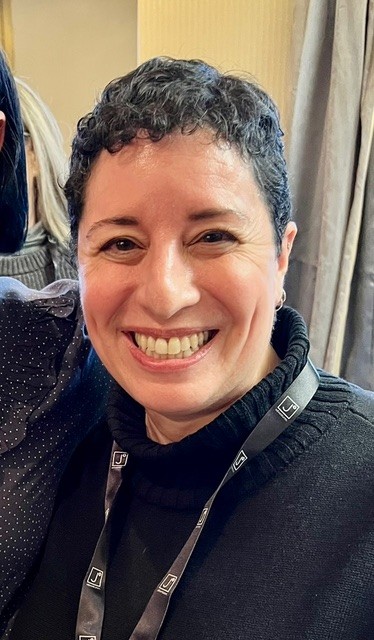
Q: You grew up in Rochester, spent formative time in Israel during college and rabbinical school, and served congregations in Austin and Suffern, N.Y., before arriving in Vancouver in 2008. How did those earlier chapters shape the rabbi you became at Kol Ami?
A: Growing up at Temple Sinai in Rochester, N.Y., summer camp at Camp Seneca Lake, being very involved in NFTY, and attending high school in Israel during my junior year absolutely shaped my Jewish identity, solidified my connection to Israel, and instilled in me a love of Jewish communal life. In high school I was already planning for rabbinical school.
I spent seven years as an assistant then associate rabbi at Congregation Beth Israel in Austin, Texas, and that is where I really learned how to serve as a rabbi. I had a great mentor there in Rabbi Steven Folberg, who taught me not only how to do rabbinic work but also ensured I found a way to have a personal life. He helped me understand that balance. But that synagogue is a large one, and when I moved to Suffern to serve The Reform Temple of Suffern-Shir Shalom, I had to learn how to be a rabbi to a small congregation. In many ways it is a completely different way of working. But that congregation sadly was shrinking, and part of my role there was to help it merge and create a new congregation in Mahwah, N.J.
When I arrived in Vancouver, I was 39 years old. I had been a rabbi for 12 years, I had served a large congregation and a small congregation, and I had spent a year in a merged congregation. Congregation Kol Ami had already received a significant donation and a direction to build a synagogue building. I came here feeling prepared and ready. I felt like I knew who I was as an adult and I knew who I was as a rabbi, having already worked in a few different situations. I felt excited to learn how to build and set a future vision. Everything I had experienced prepared me to come here and build and grow this community and raise my children here and prepare to stay for the long haul.
Q: Of all your years here, are there a few favorite moments or accomplishments that stand out? Milestones, b’nei mitzvah, holidays, or community moments that capture what Kol Ami means to you?
A: There are a lot of stand-out moments, but there is one that really captures who this community is. Years ago we had two deaths on the Sunday morning before Purim, which was on Wednesday. And I already had a Brit Milah scheduled for that Tuesday. One of the deaths was a founder of our congregation, and one was the mother of another founder—the two families were very close. The earliest the city and the cemetery would let us bury was Tuesday. We had one funeral at 10 a.m., then the Brit Milah was at noon, and the second funeral was at 3. We had the bulk of our congregation at all three events. That evening we had a shiva minyan for both families together with even more members of our congregation present. The next night was the Purim Shpiel. It was all of the oys and joys of Jewish life all at the same time, and our members were really present and participating in caring for each other and celebrating. We are a community who deeply love each other and understand our responsibilities to each other.
Q: What does being a rabbi to this specific community mean to you personally? What keeps you inspired after 18 years?
A: I really love this community. We have grown slowly and steadily over the years, which means there are always new personalities in the mix. I feel both challenged to always push my creativity in programming and teaching and supported both when that programming is successful and also when it’s not. I feel very lucky to be a part of this congregation, and while I very much look forward to my sabbatical this year, I know I will also be pleased to return and recharged to dig back into serving.
Q: How has Kol Ami grown or changed during your tenure? What’s different about the congregation now compared to when you arrived in 2008?
A: Well, we now have our own building; that has changed a lot of what and how we do things. We have more staff than we had, which has also helped ensure that we can do more. And while we have grown from 90 families to 150-something families, we have worked hard to still feel intimate. It is still possible to know everyone in our congregation. But overall I think we are more sophisticated in the business side of running a congregation, and more professional in how we run the programmatic and spiritual side of congregational life.
Q: Kol Ami has built a strong culture around legacy giving through the Life & Legacy program and the Legacy Circle. Why does that culture of legacy matter so much to the congregation’s future?
A: Programming and creativity in congregational life have financial consequences. We are very blessed to have a strong culture of giving generously to our congregation, which is how we’ve gotten to where we are. We are still deep in the building phase of our Life & Legacy program. The people who have committed to remember the congregation in their wills are very much alive, and the fund itself is not yet at a point where we are withdrawing money to fund our congregation. But we do look forward to a time when that preparation can help us do more or even survive difficult financial times in the future.
Q: You’ve described Kol Ami’s members as people who “took seriously the commitment to creating the kind of community they wished to be a part of.” As you look ahead to the next chapter, what’s your hope for Kol Ami’s future?
A: I hope we continue in our commitment to community building. Both inside Congregation Kol Am and in the outside Vancouver community. I hope we continue to be a place where people can explore and find comfort in many different ways of expressing their Judaism, whether it is through study, religious practice, or social interaction. Really, I love our mission statement; I think it is not only a great statement of who we are right now but also who we continue to be. The cornerstone of living, learning, and celebrating Jewish life in Southwest Washington.


